Field note 05 · Reviewed 2026-11-18
Treated playset wood: sorting and disposal in Ohio
Old playset lumber should be identified, contained, and routed to an appropriate facility—not burned in the backyard.
01
Assume outdoor lumber may be treated
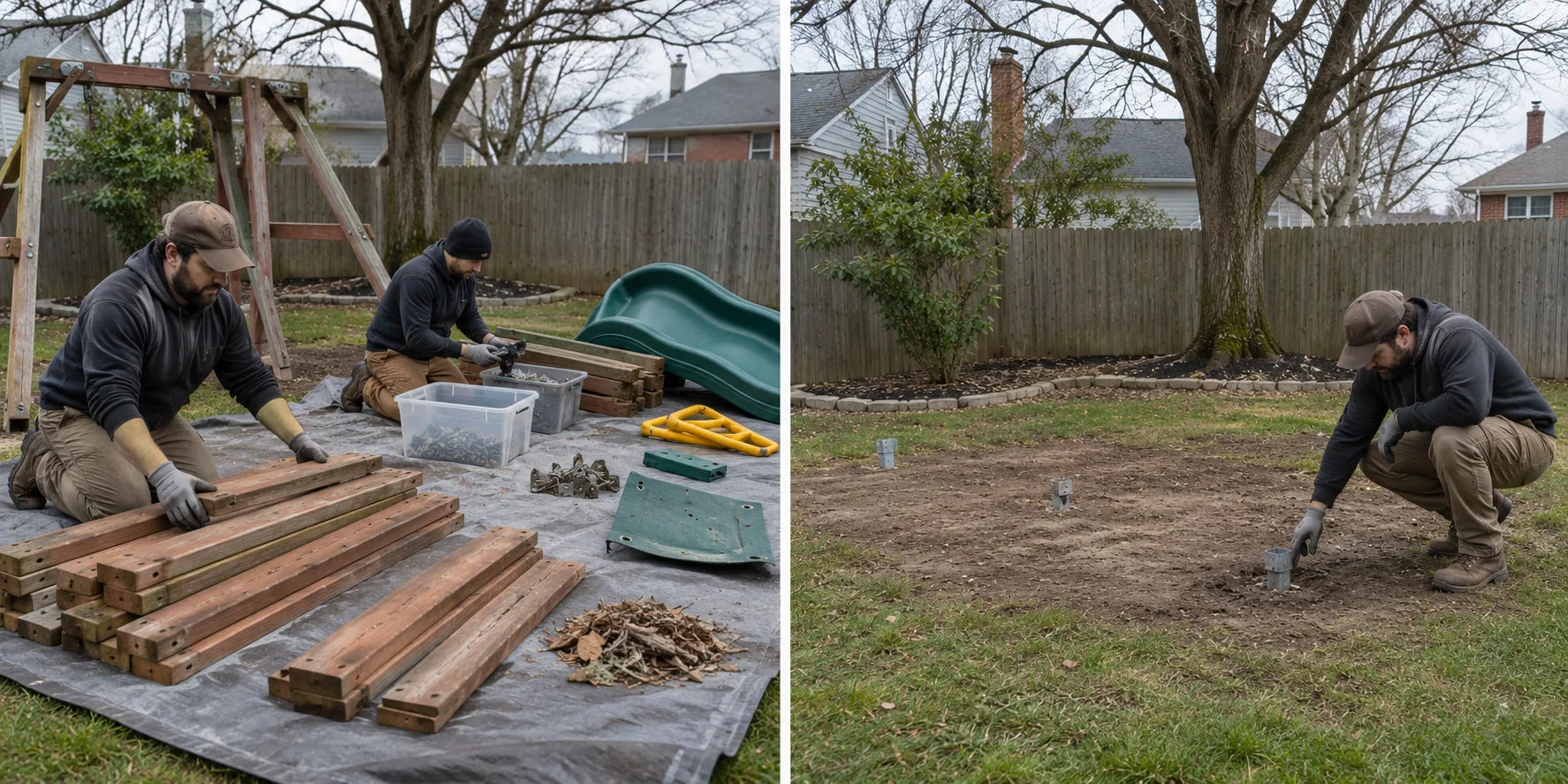
Many wooden playsets use pressure-treated posts or framing because they contact weather and soil. Stain, paint, sealant, metal brackets, plastic accessories, roofing, and concrete create a mixed load. Age and appearance alone do not reliably identify the treatment.
Keep material categories visible during dismantling. Do not grind questionable lumber into mulch or mix it with clean firewood.
02
Do not burn it
The National Pesticide Information Center advises against burning treated wood. Burning concentrates chemicals in smoke and ash and creates an exposure route for people, pets, soil, and nearby property. Ohio open-burning rules add another reason not to treat a playset as a backyard burn pile.
Painted, coated, or unknown outdoor lumber should receive the same cautious treatment. Keep it dry and stable until a disposal route is confirmed.
03
Use an authorized waste route
Ohio EPA guidance directs treated lumber toward permitted municipal solid-waste or construction-and-demolition facilities and recommends checking with the local solid waste district. Facilities can set their own preparation and acceptance rules.
Call before delivery or rely on a hauler who has confirmed the destination. Ask about maximum lengths, protruding nails, concrete attached to posts, roofing, and mixed plastic pieces.
04
Contain sharp hardware
Remove hardware only when it can be done safely. Bent nails, screw points, brackets, chain, and hooks should go in rigid containers or remain controlled in stable sections. Thin bags are not adequate for sharp fasteners.
Keep the material away from children, pets, tires, and mower routes. A magnetic sweep can help with ferrous fasteners, but it will not find aluminum, stainless, or plastic pieces.
05
Document the agreed load
A useful removal estimate distinguishes lumber, concrete, soil, roofing, plastic, loose metal, and unrelated household debris. Extra material changes weight, volume, sorting time, and facility rules.
JunkPilot does not claim that every component will be recycled or donated. The practical promise is to identify the material and use an appropriate route based on current facility acceptance.
Source note
This guide combines field-planning principles with official Ohio and local disposal information reviewed on 2026-11-18. Facility rules and municipal programs change; verify current acceptance before setting out or delivering material.

 Call (937) 360-4107