Field note 04 · Reviewed 2026-11-18
What happens to anchors, footings, and the ground?
Define the stopping point before the frame comes down so the final yard condition is not a surprise.
01
Identify the anchor type
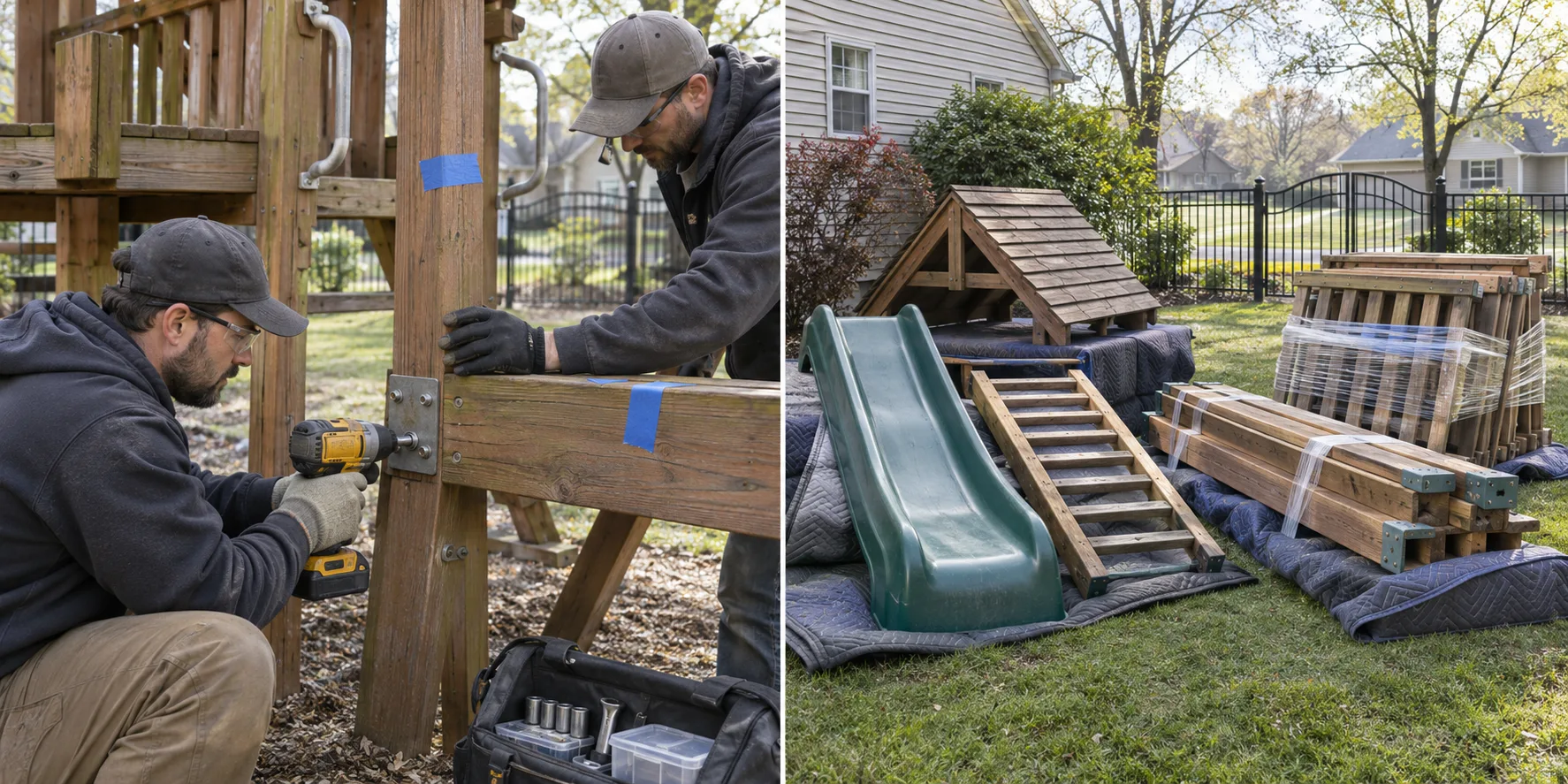
Common systems include driven stakes, auger anchors, surface brackets, buried plates, posts set directly in soil, and posts embedded in concrete. A single structure may use more than one system after years of repairs.
Photograph every visible base. If concrete is known to be present below grade, mention its approximate size or how it was installed.
02
Separate structure removal from excavation
Taking down the playset frame does not necessarily include removing large concrete footings. Excavation adds weight, soil disturbance, disposal volume, and the possibility of nearby utilities or irrigation.
The estimate should state whether stakes, shallow anchors, exposed brackets, concrete, and below-grade post remnants are included. Do not rely on the word “complete” without defining these items.
03
Expect a visible footprint
Mulch beds become compacted. Grass may be thin or absent. Post holes, anchor holes, borders, landscape fabric, and discolored patches can remain after the structure leaves. Removal reveals the ground; it does not recreate a finished lawn.
Ask what level of basic cleanup is included and what belongs to a landscaper, concrete contractor, or utility professional.
04
Check before digging
Never assume the area below a playset is clear. Irrigation, lighting cable, pet containment wire, drainage, and other private lines may be present. Public utility marking does not identify every private system.
Tell the crew about known underground features and do not authorize excavation beyond the agreed scope without the appropriate checks.
05
Plan the next use
If the space will become lawn, garden, patio, or a new play area, document the desired handoff. A landscaper may prefer footings removed to a specific depth; a new structure may require a different layout.
Sequence the work so the removal crew and next contractor agree on what stays, what leaves, and who handles soil, fill, grading, or surface restoration.
Source note
This guide combines field-planning principles with official Ohio and local disposal information reviewed on 2026-11-18. Facility rules and municipal programs change; verify current acceptance before setting out or delivering material.

 Call (937) 360-4107