Field note 03 · Reviewed 2026-11-18
Measure the gate and carry route before removal day
The narrowest fixed point—not the biggest open lawn—usually controls how the structure comes apart.
01
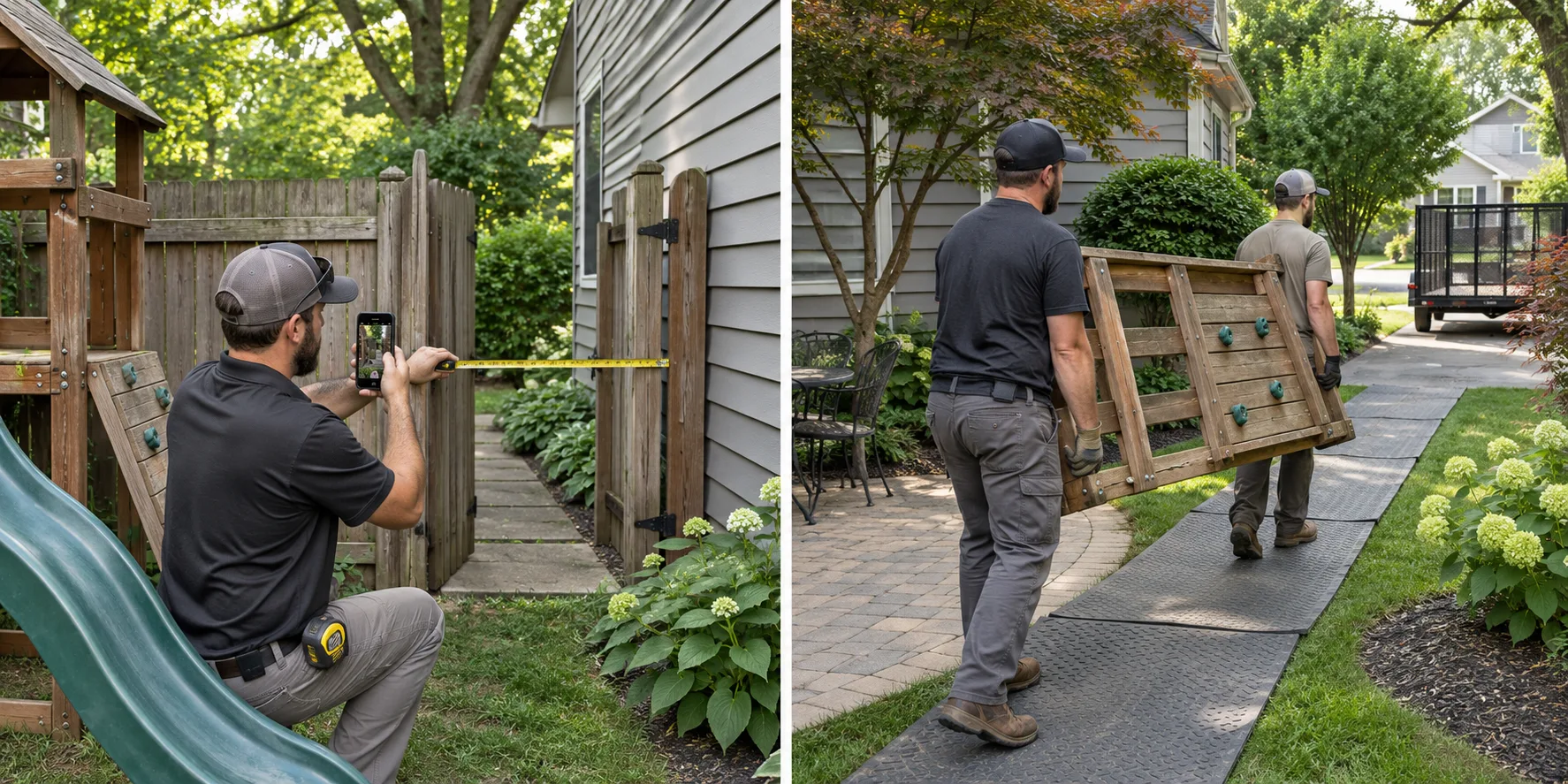
Measure clear width
Open the gate as far as it can safely travel. Measure from the closest fixed obstruction on one side to the closest fixed obstruction on the other. Hinges, latches, posts, masonry, downspouts, and AC equipment all count.
Record the number and photograph the tape in place. If removing the gate panel is possible, say so, but do not assume the posts can be disturbed.
02
Trace the route in sections
Walk from playset to loading point and break the route into straight segments. Record the narrowest width, sharpest turn, lowest overhead point, steps, slopes, and surfaces for each section.
A long beam may clear a gate but fail at the next ninety-degree turn. A roof panel may fit on edge yet be unsafe to carry beneath low branches.
03
Notice the ground
Soft turf, wet areas, gravel, retaining walls, drainage swales, and steep grades change how material can be carried. Mention irrigation heads, invisible dog fencing, septic components, and landscape lighting if present.
Removal does not automatically include ground protection, lawn repair, or grading. Those expectations need to be discussed before work begins.
04
Choose a realistic loading point
The nearest point is not always usable. A trailer needs a safe, legal place with enough room to maneuver and without blocking sight lines, hydrants, or neighbors. Driveway condition and overhead clearance matter.
If curb loading is the only option, share parking rules and traffic conditions. Keep vehicles out of the intended position on removal day.
05
Prepare without creating risk
Move toys, hoses, planters, furniture, pet waste, and loose yard items. Unlock gates and keep children and pets away from the structure and work path.
Do not loosen structural bolts, pull anchors, or cut bracing unless you are qualified and the frame is supported. The best preparation is clear access and accurate information, not a partially destabilized playset.
Source note
This guide combines field-planning principles with official Ohio and local disposal information reviewed on 2026-11-18. Facility rules and municipal programs change; verify current acceptance before setting out or delivering material.

 Call (937) 360-4107