Field note 01 · Reviewed 2026-11-18
Dismantle or demolish an old playset?
The answer comes from condition, connections, access, and what—if anything—needs to survive.
01
Start with the reason for removal
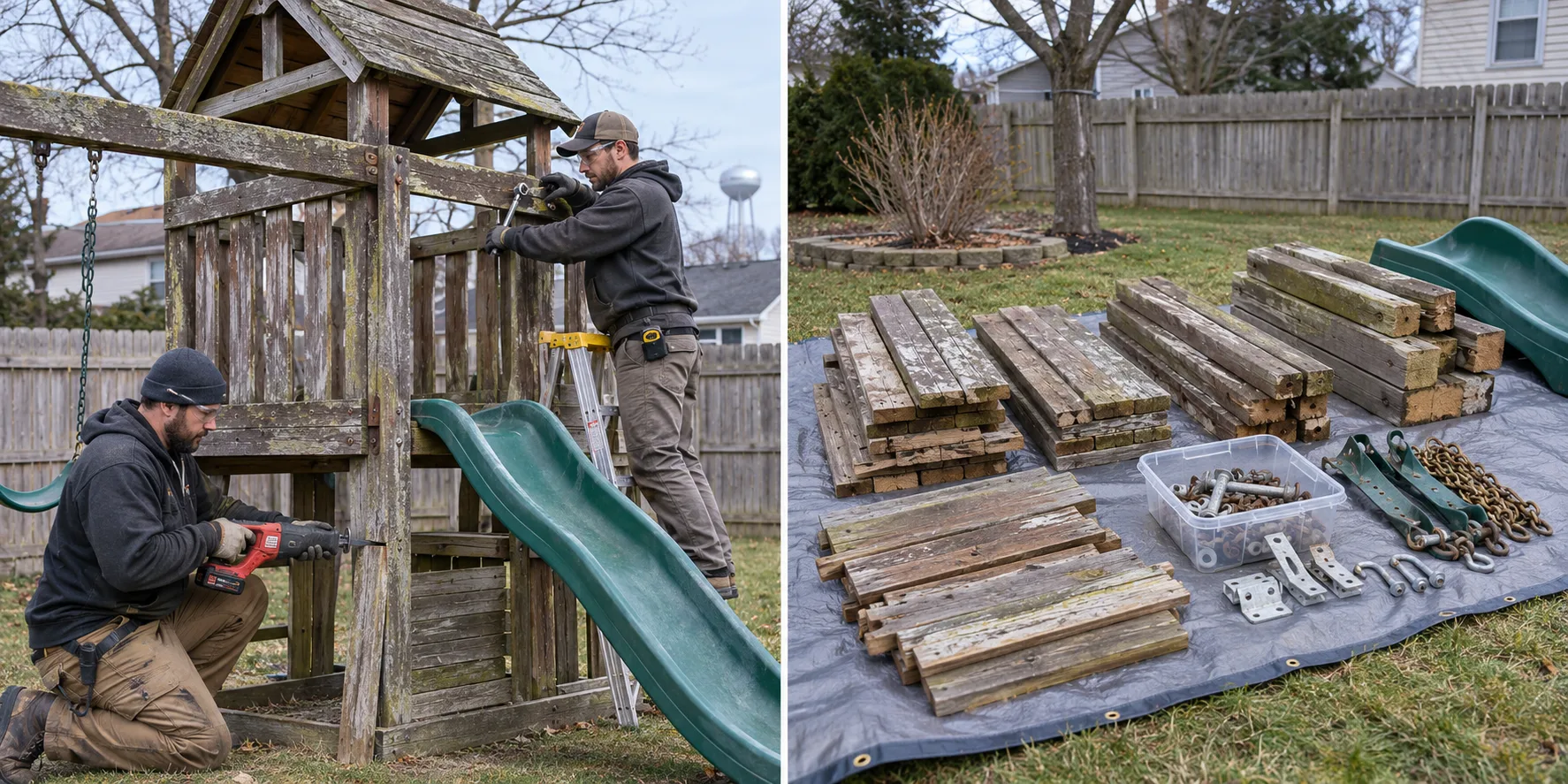
A playset that is leaving because the children outgrew it is a different object from one that has rot at the post bases, loose joints, or storm damage. If intact pieces are meant for storage or reuse, dismantling deserves consideration. If the material is deteriorated and no part needs to remain usable, controlled demolition is usually the more direct route.
Neither word means careless work. Dismantling separates connections in a planned order. Demolition reduces the structure into controlled sections. Both require a stable sequence, an exclusion zone, and a clear route for material leaving the yard.
02
Look closely at connections
Bolts that still turn, brackets that are not deeply corroded, and lumber that remains sound make dismantling more realistic. Seized fasteners, buried screw heads, swollen wood, stripped hardware, and repairs made with mixed fasteners can turn a neat disassembly into repeated cutting.
Photograph representative joints, the post bases, the swing-beam connection, and any place the structure has shifted. Do not test a questionable joint by climbing or shaking the frame.
03
Decide what must be saved
Make a short keep list before anyone starts: perhaps a slide, two swings, a climbing wall, a name plate, or a set of brackets. Mark the items and create a dry staging area away from the work path. A general request to “save anything useful” is too vague once weathered parts begin to come apart.
Reuse is never automatic. A component can look sound from a distance and reveal cracks, corrosion, or enlarged fastener holes after removal. Treat every save request as an inspection decision, not a guarantee.
04
Let access influence the method
A wide, direct route may allow large sections to leave the yard. A thirty-six-inch gate, tight corner, stair, or narrow alley can require additional separation even when the playset itself is sound. Measure the clear width between the posts, not the width printed on the gate panel.
Also note overhead wires, branches, HVAC equipment, garden borders, soft lawn, slopes, and the distance to a safe loading position. The route often determines labor more than the tower height does.
05
Make the estimate useful
Send wide photos from all four sides, close views of anchors and damaged joints, the overall dimensions, gate width, carry distance, and the keep list. Mention concrete footings, electrical additions, landscape lighting, or a sandbox integrated into the base.
The crew can then discuss a likely method and identify what still needs an on-site look. A good estimate defines the expected structure, access, keep items, anchor handling, debris, and ground handoff instead of relying on one photograph.
Source note
This guide combines field-planning principles with official Ohio and local disposal information reviewed on 2026-11-18. Facility rules and municipal programs change; verify current acceptance before setting out or delivering material.

 Call (937) 360-4107